
Texas Sex Offender Registry
Searching for sex offenders in Texas starts with the statewide registry run by the Texas Department of Public Safety. The DPS sex offender registry covers all 254 counties and is free to use. You can look up registered sex offenders by name, address, or zip code at any time through the official public portal. Local law enforcement agencies work with the DPS to keep registration records current. Whether you need to check a specific address or find an offender by name, the Texas sex offender registry gives you direct access to that information.
Texas Sex Offender Registry at a Glance
About the Texas Sex Offender Registry
The Texas Sex Offender Registration Program is governed by Chapter 62 of the Texas Code of Criminal Procedure. This law requires adult and juvenile sex offenders to register with the local law enforcement authority where they live. If an offender lives within city limits, they register with the city police department. If they live in an unincorporated area, they register with the county sheriff. The Texas Department of Public Safety collects all registration data from local agencies and maintains the statewide database used for public notification. The program is designed to protect the public by keeping community members informed about registered sex offenders living in their area.
Under Article 62.005 of the Code of Criminal Procedure, the DPS must make most sex offender registration information available to the public. The database holds details submitted by sex offenders to local law enforcement, including name, current address, a color photograph, and the offense they were convicted of or adjudicated for. Not everything in the file is open to the public. Social security numbers, driver's license numbers, phone numbers, and online identifiers are kept out of the public record under state law. DPS notes that fingerprint verification is the only certain way to confirm that a person matches a specific sex offender record, since name and date-of-birth searches can sometimes pull up partial or similar matches. If you believe a record contains an error, contact the local law enforcement agency listed as the verification agency on that offender's registration.
All information in the Texas registry comes from local agencies statewide, not from the DPS directly. The DPS compiles and publishes what local offices submit.
The Texas DPS Sex Offender Registration Program page explains who must register, what information is collected, and how public notification works for registered sex offenders across Texas.
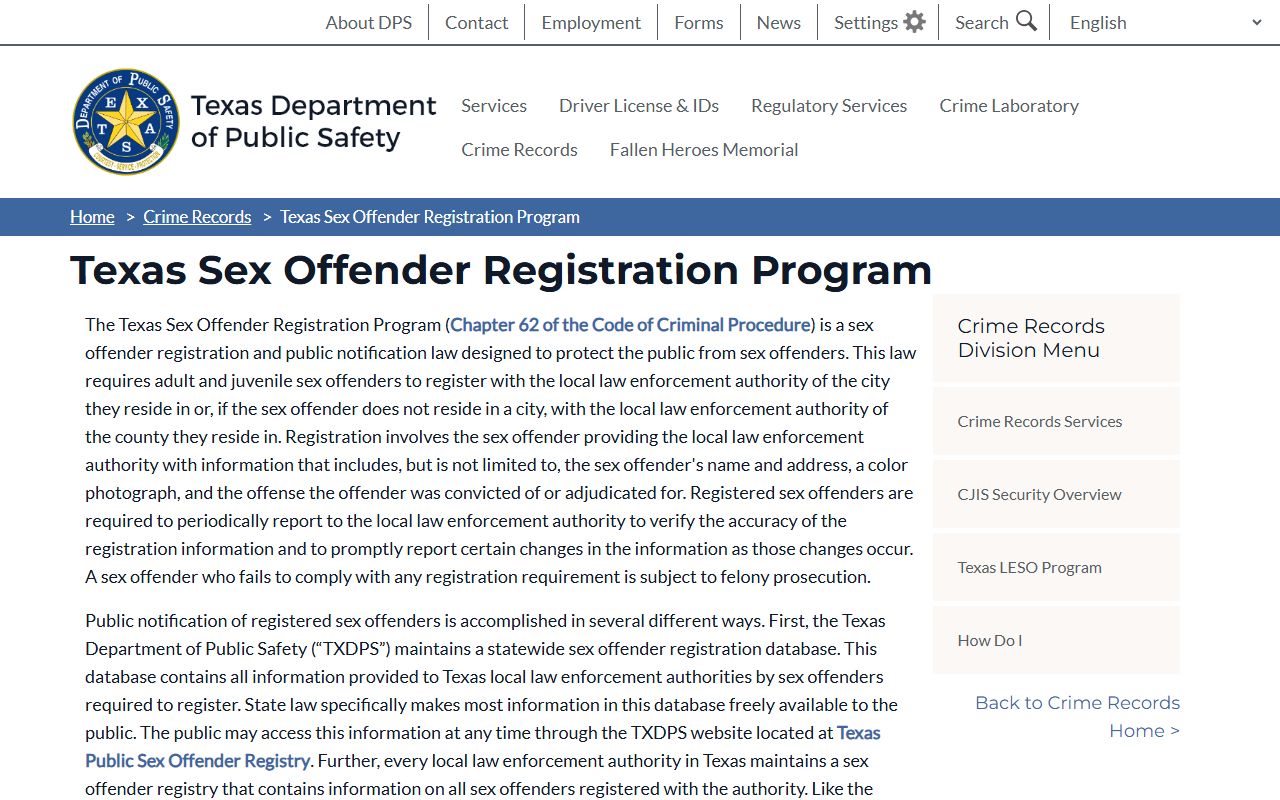
The DPS program page breaks down the registration process and details how local law enforcement agencies and the state work together to maintain the Texas sex offender registry.
How to Search Texas Sex Offenders
The main tool for finding sex offenders in Texas is the DPS public portal at sor.dps.texas.gov. This is the official state registry search. You can look up offenders by name, address, city, county, or zip code. There is also a map view that shows offender locations near any Texas address. The site is free and does not require an account. DPS updates the database on a regular basis as local agencies report new registrations or changes to existing ones.
The DPS portal offers a few different ways to use the registry. Beyond basic name and address searches, you can sign up for an email subscription service that sends alerts when specific offenders update their registration information. This way you get notified of changes as they happen rather than having to check back manually. Social network site operators have additional access options available through the same portal. You can also download a full copy of the registry database if you want to run your own analysis or cross-reference it with other data. Keep in mind that the DPS cannot guarantee results based on names and birthdates alone. Fingerprint verification is the only method that positively links an individual to a sex offender record.
For searches that cross state lines, the National Sex Offender Public Website connects to registries in all 50 states. It pulls directly from state databases including Texas. If an offender has moved out of Texas, searching through NSOPW can help locate their current registration status in another state.
Basic information you need to search:
- Full or partial name of the person you are searching for
- A street address or zip code for a geographic area search
- City or county name to narrow results to a specific location
The Texas DPS Public Sex Offender Registry portal is the official search tool for locating registered sex offenders anywhere in Texas by name, address, or map area.
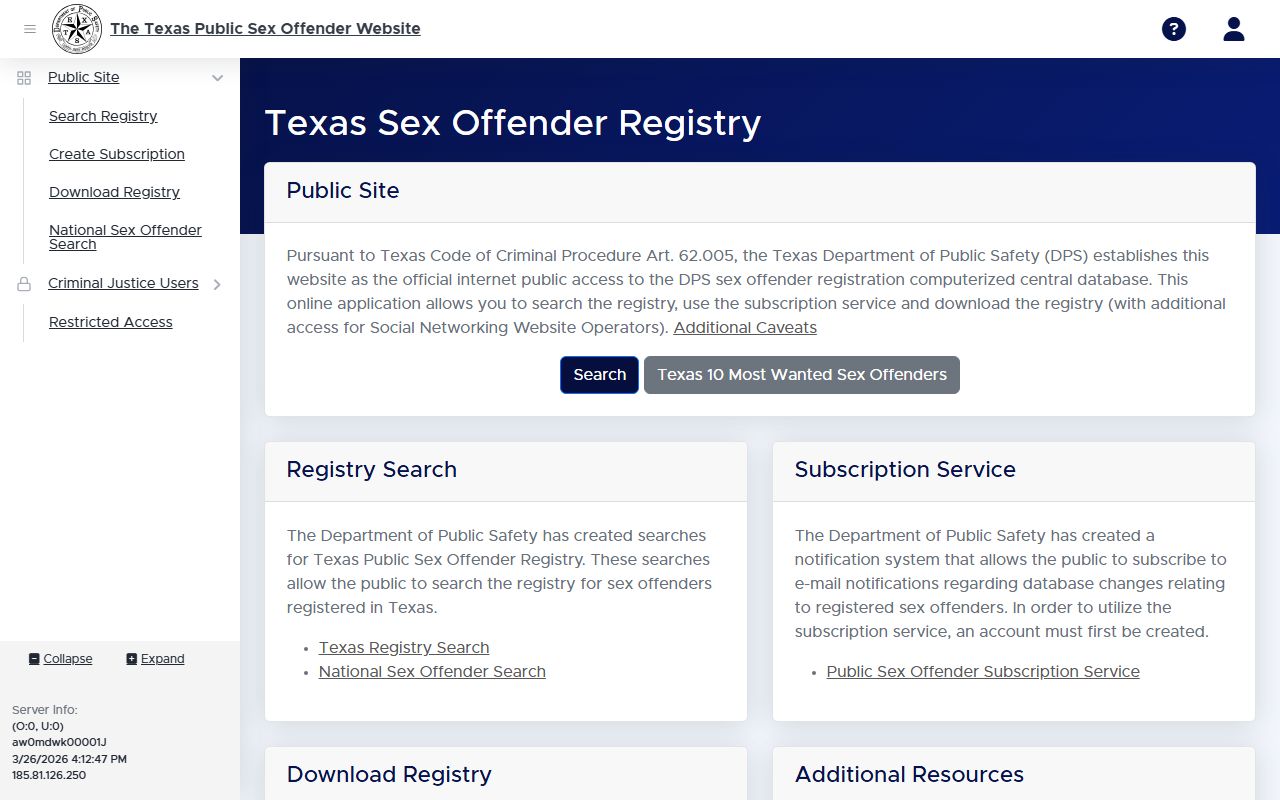
The portal includes name and address searches, a map-based locator, and an email alert subscription service for staying informed about registered sex offenders near you.
Sex Offender Registration Requirements in Texas
Texas law sets a strict timeline for sex offender registration. Under Chapter 62, offenders must register within seven days of release from incarceration, placement on community supervision, or first arriving in Texas from another state. This deadline applies whether someone is moving to Texas for the first time or simply changing addresses within the state. Missing the seven-day window can result in immediate felony charges. The clock starts the day the offender is released or arrives, not when paperwork is processed.
Registration applies to individuals convicted of specific offenses. These include sexual assault, aggravated sexual assault, indecency with a child, online solicitation of a minor, promotion or possession of child pornography, and a range of other sex-related crimes. The requirement also covers people who received deferred adjudication for qualifying offenses and those with convictions from other states or from federal court for comparable crimes. When registering, an offender must provide their full name and any aliases, current address, a current color photograph, the offense they were convicted of, and other identifying details required by the local agency. Offenders must also verify their registration information on a regular basis. High-risk offenders may face more frequent check-in requirements than those rated at lower risk levels. Any change in address, employment, or other key information must be reported promptly.
Failing to register, to update information, or to meet verification deadlines is a felony under Texas law. Prosecution can follow quickly once a deadline is missed.
Read the full text of Chapter 62 of the Texas Code of Criminal Procedure, the state statute that governs sex offender registration for all individuals convicted of qualifying offenses across Texas.
Chapter 62 covers initial registration timelines, the information offenders must provide, periodic verification requirements, and the felony penalties for anyone who fails to comply.
Texas Sex Offender Risk Levels and Notification
Texas uses a four-tier risk assessment system to determine public disclosure requirements and supervision levels for registered sex offenders. Level 1 offenders are rated low risk. They face the least restrictive public disclosure requirements under state law. Level 2 offenders are considered moderate risk and are subject to broader public notification. Level 3 offenders are high risk. Their information is shared widely through the online registry database and through active community notification programs. The fourth category covers sexually violent predators subject to civil commitment, which carries the most intensive supervision of any group.
Notification reaches the public through several channels. The DPS keeps the main online registry that anyone can access at any time. Local law enforcement agencies can also notify a community through newspaper or other local publications when an offender moves into the area. For high-risk offenders and civilly committed sexually violent predators who relocate, the DPS sends postcards to every home and business in the surrounding area. The postcard includes the offender's photo and basic details. This postcard program is reserved for the highest-risk cases only. The Texas Attorney General's office handles civil commitment proceedings and provides legal guidance on how sex offender laws are enforced statewide.
Not every registrant in the DPS database appears on the public website. Some are withheld by court order under Chapter 62.
The National Sex Offender Public Website, run by the U.S. Department of Justice, links registries from all 50 states including Texas into a single searchable platform.
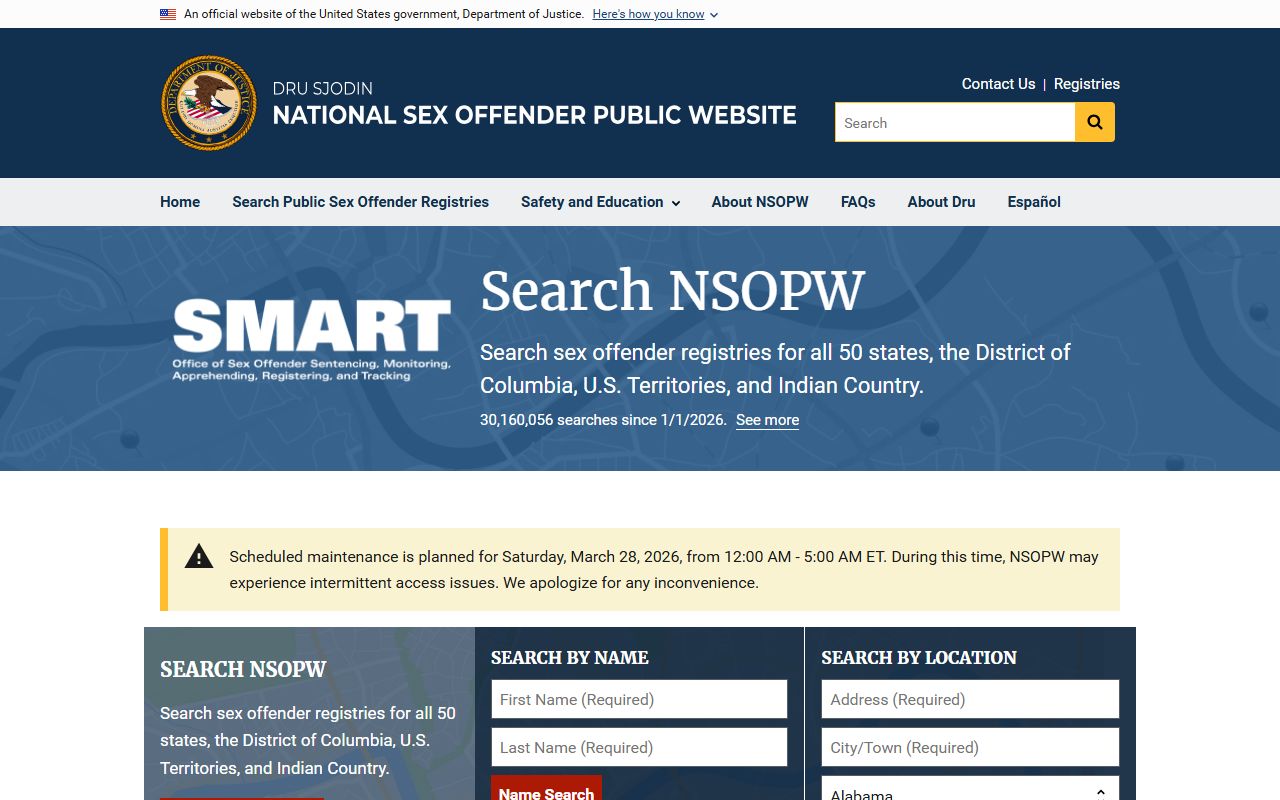
NSOPW is useful when an offender has moved from Texas to another state, since it pulls current data directly from each state's own registry.
The Texas Attorney General's office represents the state in civil commitment proceedings for sexually violent predators and publishes guidance on sex offender registration requirements across all Texas jurisdictions.

The AG's office also runs the Crime Victims' Compensation Program and provides resources for sexual assault victims throughout the state.
Juvenile Sex Offenders in Texas
Juveniles adjudicated for qualifying sex offenses must register under Chapter 62, just as adults do. The Texas Juvenile Justice Department handles registrations for youth committed to TJJD facilities. The same seven-day window applies. Under the Texas Family Code, when a juvenile court places a child on probation or commits them to TJJD for a sex offense, the court must order sex offender registration as a condition. Both the juvenile and their parents must be told about the registration requirements at the time of the order. Local probation departments follow up to make sure juveniles placed on community supervision stay current with their registration obligations.
TJJD provides sex offender treatment programs inside its facilities. These programs use individual therapy, group sessions, and family involvement to address the factors tied to offending behavior. In most situations, juvenile sex offense records cannot be sealed, and the registration requirement stays in force even if other records are handled differently. Early termination of the registration requirement is possible in limited cases after a juvenile completes treatment and demonstrates through formal review that they no longer pose a risk to others. The review process involves the original court and takes into account treatment outcomes and ongoing risk assessments.
The Texas Juvenile Justice Department oversees sex offender registration and treatment programs for youth in its custody and works with probation departments to monitor compliance statewide.

TJJD coordinates with the DPS and local probation offices to make sure juveniles meet the same Chapter 62 registration requirements as adult offenders throughout Texas.
Civil Commitment of Sexually Violent Predators in Texas
Texas law provides for the civil commitment of individuals classified as sexually violent predators under Chapter 841 of the Health and Safety Code. This applies to people with a conviction for a sexually violent offense who also have a behavioral abnormality that makes them likely to commit further predatory acts. The Texas Civil Commitment Office supervises and treats those under commitment. Commitment is indefinite. It continues until a court finds that the person's condition has changed enough that they no longer present a risk to the community. The Office of the Attorney General files civil commitment petitions after referrals from the Texas Department of Criminal Justice or from TJJD.
Committed individuals must report monthly to the Civil Commitment Office and comply with all conditions set for them. Failing to meet those conditions can result in revocation of outpatient status and a return to secure housing. A public registry of civilly committed predators is available, and community notification goes out when a committed predator moves into a new neighborhood. These cases represent the highest level of risk under Texas law, and the supervision requirements reflect that.
Law Enforcement and Registry Compliance
Every local law enforcement agency in Texas maintains its own registry for sex offenders in its jurisdiction and forwards data to the DPS for the statewide system. The Texas Commission on Law Enforcement requires training on Chapter 62 for all officers assigned to sex offender registration duties. This training covers how to process registrations, verify accuracy, and investigate violations of registration requirements. TCOLE also sets continuing education standards for registration officers to stay current on any changes to state law. The consistency of this training across Texas's many counties and cities means that registration enforcement follows the same standards regardless of where an offender lives.
The Texas Commission on Law Enforcement (TCOLE) certifies officers who handle sex offender registration and sets training requirements for agencies in all 254 Texas counties.

TCOLE's training standards make sure that officers handling sex offender registration in every Texas county and city follow consistent procedures under Chapter 62 of the Code of Criminal Procedure.
Browse Texas Sex Offenders by County
Each of Texas's 254 counties has its own local law enforcement agency responsible for sex offender registration in that area. Pick a county below to find local contact information, search resources, and registration details for that specific location.
Texas Sex Offenders by City
In Texas cities, the local police department handles sex offender registration. Pick a city to find the police department, search links, and local resources for registered sex offenders in that area.